Ant International CEO Calls for AI-Powered 'Re-Globalisation'
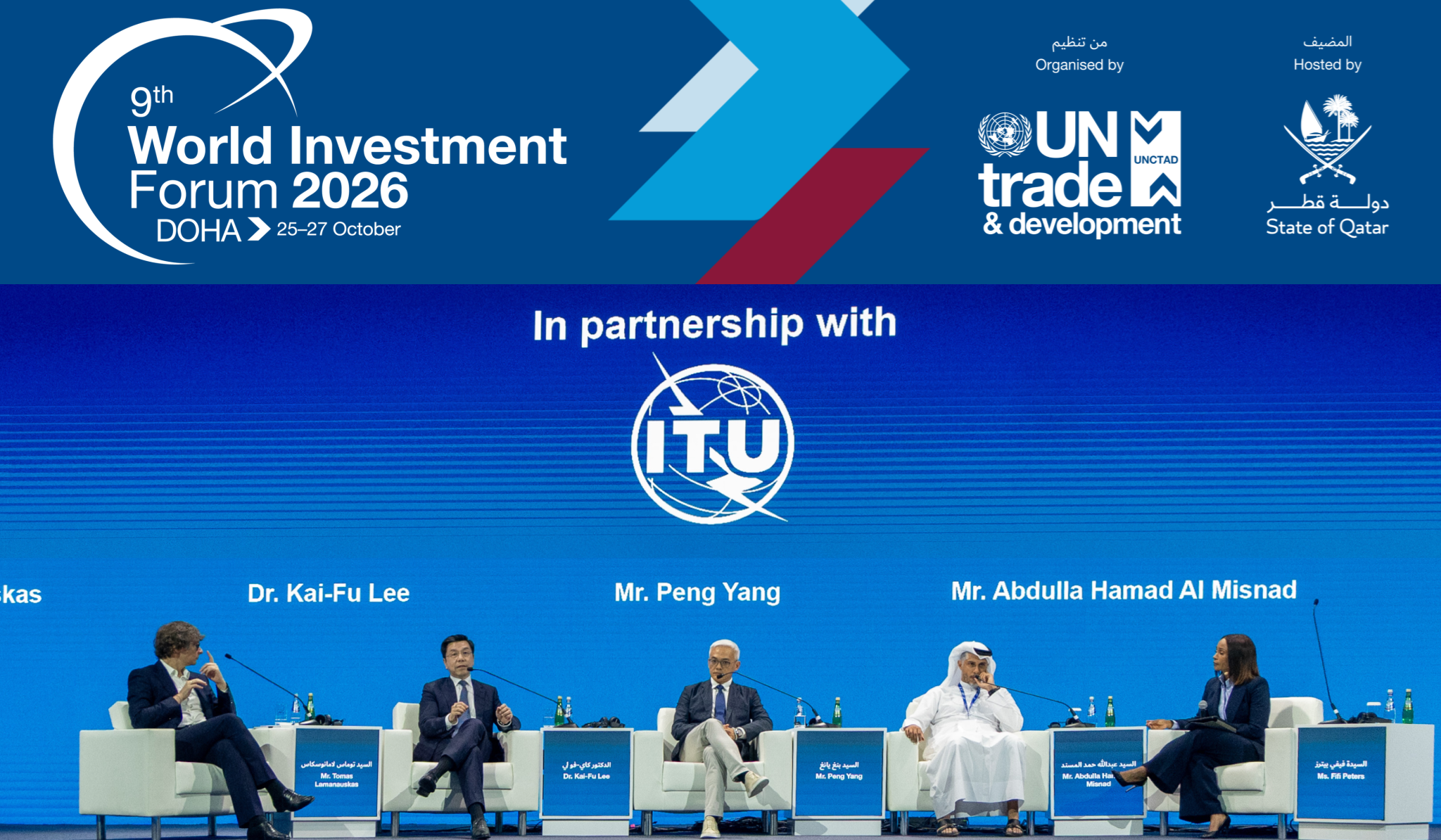
Speaking at UNCTAD's World Investment Forum 2026, Peng Yang argued AI can democratise global trade for the 95% of merchants who are SMEs.
Key takeaways
- Ant International serves over 1 million new small merchants from 54 new markets in three years.
- SME cross-border transaction volume grows 10 times faster than global trade.
- WorldFirst helps over 2 million SMEs with US$500 billion cumulative transaction volume.
- Alipay+ connects over 50 digital wallets to more than 150 million merchants globally.
- Antom Autopilot expects 95% of merchants to complete onboarding within one hour by end of 2026.
Ant International CEO Peng Yang used a platform at the United Nations Trade and Development (UNCTAD) World Investment Forum 2026 to argue that artificial intelligence can rebalance a global trading system that has historically excluded the small businesses that make up more than 90% of the world's enterprises.
Speaking on the panel "Investing in AI for an Inclusive Digital Future," Yang framed the moment as an opportunity to launch what he called a new, inclusive "re-globalisation" — one in which AI and digital connectivity give small and medium-sized enterprises (SMEs) the same access to cross-border markets that large multinationals have long enjoyed.
The structural gap Yang described is well documented. The WTO's 2024 World Trade Report found that only 8% of small firms and 15% of medium-sized firms export directly, compared with 30% of large firms. A 2025 OECD survey sharpens the picture: 52% of large firms reported using AI, against just 17.4% of small firms.
Yang's argument is that closing both the trade gap and the AI divide simultaneously is the only way to make the next phase of globalisation politically and economically sustainable.
A CEO's Case for Inclusive Re-Globalisation
Yang grounded his case in Ant International's own operating data, which he said demonstrates what happens when AI is made accessible to smaller merchants.
In the last three years, we have seen tremendous growth for SMEs when innovation meets inclusion. When we offer them powerful full-stack AI-native solutions, cross-border transaction volume of SMEs across our own businesses has been growing by about 50% every year, which is 10 times the growth rate of the total volume of global trade.
Ant International, which processes 25 million transactions daily across its payment, account, embedded finance and digitalisation services, says 95% of its 150 million-strong global merchant base are SMEs. Over the past three years, the company has onboarded more than 1 million new small merchants from 54 new markets. Yang framed that growth as evidence that the technology barrier, not market demand, is the binding constraint on SME participation in global trade.
The AI-Native Stack Behind the Numbers
In September 2026, Ant International rolled out a full suite of AI-native products covering payments, accounts, foreign exchange, treasury and growth, many of them designed specifically for SMEs that lack dedicated finance or treasury teams.
At the FX layer, the company's Falcon TST AI forecast model has achieved state-of-the-art performance on the MASE benchmark, with a consistent forecast accuracy rate above 93%. The model, previously used internally and with major banking partners, has now been democratised for SME use to reduce cross-border currency risk.
Two proprietary agents sit on top of that infrastructure. WorldFirst Autopilot, the company's global AI business agent for SMEs, streamlines financial tasks and connects businesses to partner services through natural language interactions. WorldFirst itself serves more than 2 million SMEs, has processed over US$500 billion in cumulative transaction volume across 210+ markets, and links merchants to 130+ e-commerce platforms and 600+ ecosystem partners.
Antom Autopilot, meanwhile, automates onboarding, integration, analysis, risk management and reconciliation for merchants. By the end of 2026, Ant International expects 95% of merchants to complete onboarding with Antom within one hour. Its SmartDispute tool lifts merchants' dispute win rate to 41.8%, compared with 24.5% without the tool, while the fully automated AutoDispute recovers an average of 18% of chargeback losses.
For consumer-facing reach, Alipay+ — Ant International's global wallet gateway — connects more than 50 digital wallets to over 150 million merchants, 95% of them SMEs.
AI-powered marketing campaigns run through Alipay+ have produced measurable lifts in target Asian commercial districts: small merchants in Bangkok's Siam Square area grew total payment volume (TPV) by 66% year-on-year and orders by 115%; merchants on Gaya Street in Kota Kinabalu, Malaysia, recorded TPV growth above 120% and order growth of 140%; and a local skincare brand in Bali, Indonesia, saw TPV rise 137% and orders 140% during the campaign window.
Trust, Standards and Regional Rollout
Yang devoted a significant portion of his remarks to the safeguards he believes are required before AI agents can be trusted to execute financial and operational tasks on behalf of businesses. He called for coordinated work between the technology and financial industries, regulators and international institutions to develop common standards and trusted infrastructure.
Trust is everything in payments and financial services, and it becomes even more critical in the AI era. We need to work closely with international organisations and regulators to develop appropriate frameworks, while building safeguards that allow businesses to use AI agents safely.
Ant International is pursuing that agenda through a series of named partnerships. In Singapore, the company works with the Infocomm Media Development Authority on privacy-enhancing technologies and participates in the Monetary Authority of Singapore's BuildFin.ai initiative on responsible AI in financial services.
It is also collaborating with Visa and Mastercard on interoperability for Know Your Agent (KYA), a framework intended to verify the identity and authority of AI agents acting on behalf of consumers and businesses.
On the product side, the company has introduced Antom AgentSafePay, which it describes as an industry-first safeguard for agentic commerce: the system verifies multi-dimensional purchase intent in real time and offers a fund guarantee against losses from intent misinterpretation, malicious prompt injection or other risks within merchant-deployed agents.
The regional footprint of these deployments is concentrated in Southeast Asia, where the Alipay+ campaign results from Bangkok, Kota Kinabalu and Bali illustrate how AI-driven marketing and payments infrastructure translate into measurable SME growth. With the cost of AI continuing to fall and onboarding friction reduced to under an hour for the vast majority of merchants, Yang argued, the conditions are in place for SMEs to participate in global trade at a scale the previous era of globalisation never allowed.
We believe in a future where the new normal of globalisation will leave no one behind. When innovation meets inclusion, everyone can pursue their opportunities like the big guys did in the past.